RAG 参考架构
概述
检索增强生成(RAG)架构将大语言模型的强大能力与外部知识检索系统相结合,能够提供准确、及时且语境相关的回答。本参考架构提供了一套完整的模式,帮助实现可扩展、可适配的生产级 RAG 系统,覆盖多种应用场景。
综合 RAG 架构
系统概述
RAG 参考架构通过整合多个组件,构建了一套健壮的知识增强 AI 系统,能够处理复杂查询、维护上下文,并提供准确、带来源归因的回答。
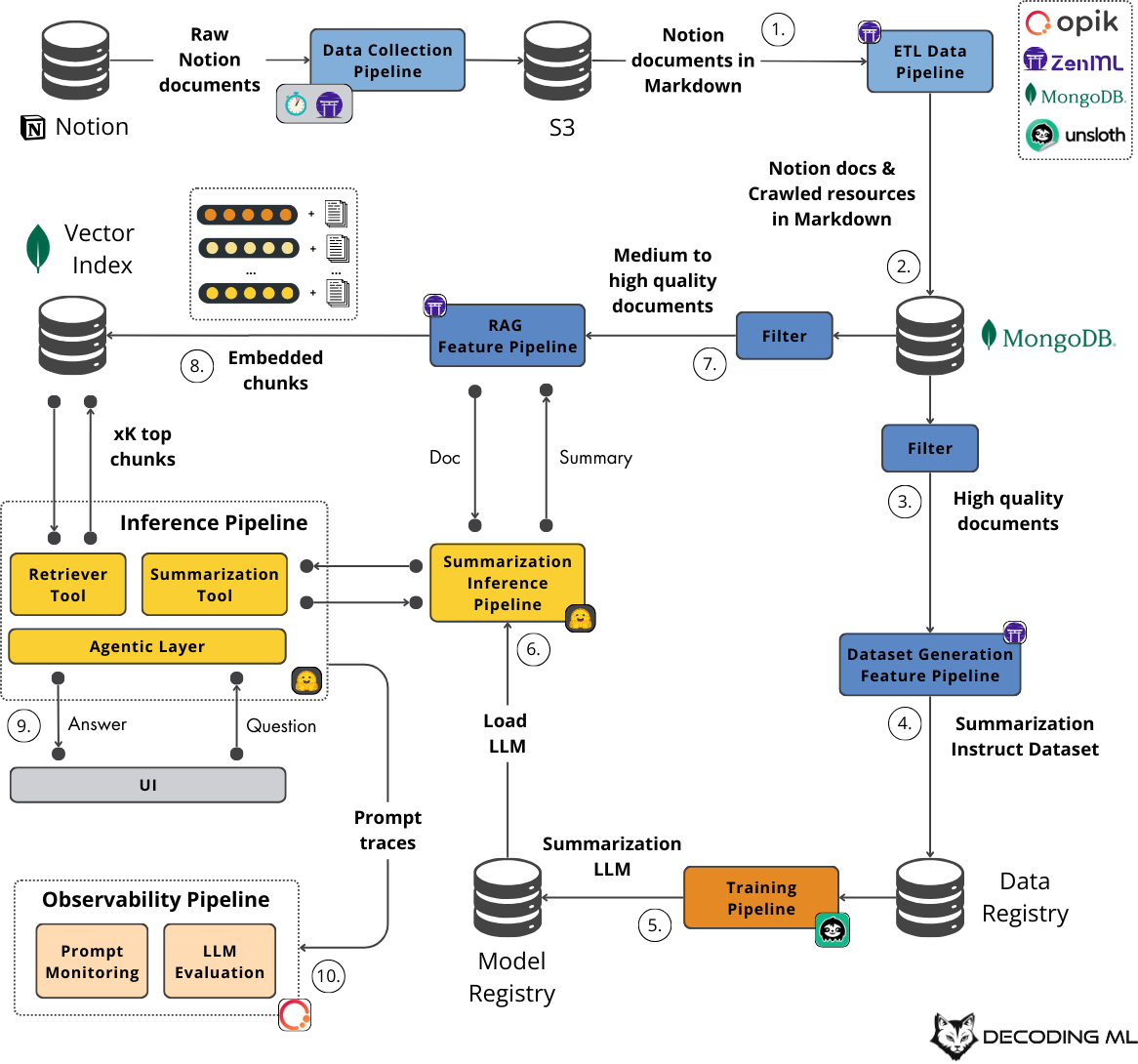
带 LLM 与智能体的综合 RAG 架构——由 RAG、LLM 与智能体驱动的第二大脑 AI 助手架构
核心组件
1. 数据摄入层
- 文档处理:多格式文档解析与内容提取
- 内容规范化:对多样化数据源进行标准化处理
- 质量评估:内容校验与过滤
- 元数据提取:自动打标与分类
2. 知识处理层
- 文本分块:智能文档分段策略
- 嵌入生成:创建向量表示
- 索引构建:高效检索索引的构建
- 知识图谱集成:结构化关系映射
3. 检索引擎
- 语义搜索:基于向量的相似度匹配
- 混合检索:语义搜索与关键词搜索相结合
- 上下文过滤:基于相关性的结果筛选
- 排名优化:结果排序与优先级调整
4. 生成层
- 上下文整合:对检索到的信息进行综合
- 响应生成:感知上下文、生成答案
- 来源归因:规范的引用与参考文献处理
- 质量保证:响应校验与事实核查
5. 智能体编排
- 查询规划:复杂查询的分解
- 多步推理:序列化信息收集
- 工具集成:访问外部系统与 API
- 结果综合:多来源信息的汇总整合
实现模式
数据处理流水线
Ingestion Pipeline:
  1. Source Integration:
     - Multi-format document support (PDF, DOCX, HTML, etc.)
     - Real-time data stream processing
     - API-based content integration
     - Batch processing for large datasets

  2. Content Processing:
     - Text extraction and cleaning
     - Language detection and normalization
     - Duplicate detection and deduplication
     - Quality scoring and filtering

  3. Chunking Strategy:
     - Semantic-aware text segmentation
     - Overlap management for context preservation
     - Hierarchical chunking for complex documents
     - Metadata preservation and association

  4. Embedding Generation:
     - Multi-model embedding strategies
     - Batch processing optimization
     - Version management and updates
     - Quality validation and monitoring
检索优化
Retrieval Strategy:
  1. Query Processing:
     - Query understanding and expansion
     - Intent classification and routing
     - Context integration from conversation history
     - Multi-language query support

  2. Search Execution:
     - Vector similarity search
     - Keyword-based filtering
     - Hybrid ranking algorithms
     - Result diversification

  3. Context Assembly:
     - Relevant chunk selection
     - Context window optimization
     - Source diversity management
     - Redundancy elimination

  4. Quality Control:
     - Relevance scoring and filtering
     - Source credibility assessment
     - Freshness and currency validation
     - Bias detection and mitigation
技术架构
向量数据库集成
1. 嵌入存储 - 多向量支持:针对不同内容类型使用不同嵌入模型 - 元数据索引:高效过滤与分面搜索 - 可扩展性:针对大规模知识库的横向扩展 - 性能:针对低延迟检索进行优化
2. 搜索优化 - 近似最近邻:高效的相似度搜索算法 - 过滤集成:基于元数据的结果过滤 - 缓存策略:对高频访问内容进行优化 - 负载均衡:分布式查询处理
知识图谱集成
1. 结构化知识 - 实体识别:自动实体提取与链接 - 关系映射:语义关系识别 - 图谱构建:知识图谱的自动化构建 - 查询转换:自然语言到图查询的转换
2. 混合检索 - 图遍历:基于关系的信息发现 - 向量-图融合:语义搜索与结构化搜索相结合 - 多跳推理:跨关系的复杂查询解析 - 上下文扩充:利用图关系补充额外上下文
高级特性
智能体化 RAG 能力
1. 多步推理
class AgenticRAG:
    async def process_complex_query(self, query: str) -> Response:
        # Decompose complex query into sub-questions
        sub_queries = await self.query_decomposer.decompose(query)

        # Process each sub-query
        sub_results = []
        for sub_query in sub_queries:
            # Retrieve relevant information
            retrieved_docs = await self.retriever.retrieve(sub_query)

            # Generate intermediate answer
            intermediate_result = await self.generator.generate(
                query=sub_query,
                context=retrieved_docs
            )
            sub_results.append(intermediate_result)

        # Synthesize final answer
        final_answer = await self.synthesizer.synthesize(
            original_query=query,
            sub_results=sub_results
        )

        return final_answer
2. 工具集成
class ToolAugmentedRAG:
    def __init__(self):
        self.tools = {
            'web_search': WebSearchTool(),
            'calculator': CalculatorTool(),
            'code_executor': CodeExecutorTool(),
            'api_client': APIClientTool()
        }

    async def enhanced_retrieval(self, query: str) -> List[Document]:
        # Standard RAG retrieval
        rag_results = await self.standard_retrieval(query)

        # Determine if additional tools are needed
        tool_requirements = await self.analyze_tool_needs(query)

        # Execute tool-based retrieval if needed
        tool_results = []
        for tool_name in tool_requirements:
            tool_result = await self.tools[tool_name].execute(query)
            tool_results.append(tool_result)

        # Combine and rank all results
        combined_results = self.combine_results(rag_results, tool_results)
        return combined_results
应用场景
企业级知识管理
- 内部文档:公司政策、流程与规范指南
- 技术文档:API 文档、系统规格说明与操作手册
- 组织知识:专家洞见与历史决策记录
- 合规信息:监管要求与审计跟踪
客户支持系统
- 常见问题自动化:对常见问题的智能响应
- 故障排查指南:逐步解决问题的操作流程
- 产品信息:详细的产品规格与功能说明
- 服务文档:支持流程与升级路径
研究与分析
- 文献综述:学术论文的分析与综合
- 市场调研:行业报告与竞争分析
- 法律研究:案例法律与监管信息
- 科学研究:研究论文与数据分析
教育应用
- 课程支持:课程材料与学习资源
- 个性化学习:自适应内容分发
- 评估工具:自动批改与反馈
- 研究辅助:学术研究与引用支持
实施指南
系统搭建
1. 基础设施配置
from rag_framework import RAGSystem, VectorDB, EmbeddingModel

# Configure vector database
vector_db = VectorDB(
    provider="pinecone",  # or "weaviate", "qdrant", etc.
    index_name="knowledge_base",
    dimension=1536,
    metric="cosine"
)

# Configure embedding model
embedding_model = EmbeddingModel(
    model_name="text-embedding-ada-002",
    batch_size=100,
    max_tokens=8191
)

# Initialize RAG system
rag_system = RAGSystem(
    vector_db=vector_db,
    embedding_model=embedding_model,
    chunk_size=1000,
    chunk_overlap=200
)
2. 文档处理
# Process and index documents
async def process_documents(document_paths: List[str]):
    for doc_path in document_paths:
        # Extract text and metadata
        document = await rag_system.load_document(doc_path)

        # Process and chunk document
        chunks = await rag_system.chunk_document(
            document=document,
            strategy="semantic_chunking"
        )

        # Generate embeddings and index
        await rag_system.index_chunks(chunks)

        print(f"Processed and indexed: {doc_path}")
3. 查询处理
# Handle user queries
async def process_query(query: str, user_context: dict = None):
    # Retrieve relevant documents
    retrieved_docs = await rag_system.retrieve(
        query=query,
        top_k=10,
        filters=user_context.get("filters", {})
    )

    # Generate response with sources
    response = await rag_system.generate_response(
        query=query,
        retrieved_docs=retrieved_docs,
        include_sources=True
    )

    return response
最佳实践
1. 数据质量管理 - 内容治理:定期审查并更新知识库 - 来源核实:验证信息的准确性与时效性 - 重复内容管理:识别并处理冗余内容 - 版本控制:跟踪变更、维护内容历史记录
2. 性能优化 - 缓存策略:对高频访问内容进行智能缓存 - 索引优化:定期维护与优化索引 - 查询优化:高效的查询处理与路由 - 资源管理:合理的资源分配与弹性扩缩容
3. 质量保证 - 响应校验:对生成的响应进行自动化质量检查 - 来源归因:规范的引用与参考文献管理 - 偏差检测:监测并缓解偏差响应 - 用户反馈:收集并整合用户反馈
监控与评测
性能指标
- 检索准确率:检索文档的相关性
- 响应质量:生成响应的准确性与实用性
- 延迟:系统响应时间与整体性能
- 用户满意度:用户反馈与参与度指标
持续改进
- A/B 测试:针对不同配置的实验对比
- 模型更新:定期更新嵌入模型与生成模型
- 索引优化:持续提升检索性能
- 反馈整合:基于用户反馈驱动系统改进